


 towpath was interrupted and the tow horses had to be led a round about way from one canal side to the other. All this was done in a most lively way. The boat people and tow horse leaders were yelling at each other, the horse bells clanged, the chains rattled. If barges were coming along as well and the boats had to give way, there regularly followed altercations with incredible insults in which threats of murder and manslaughter were of the gentler sort. However, it never did come to any blows. The worst that happened was that one of them shouted to his mates; "Hold me, hold me, or else I'll break his back!" The boatmen in those days were well-paid and proud people.
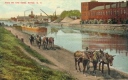 I knew many of them personally, as they often carried consignments of animal fodder and bran to the Rhine for my father, collecting them here or bringing us grain and pulses, which my father traded. They wore their caps at an angle and had an aggressive, cocky way of walking. I specially remember one of them. When he knew you were watching, he walked about his boat real smart and fell in
 the water once or twice. Later on he fell on evil days, he did not exactly come begging, but blinked his eye miserably at my father and said; "Oh Master Peter, things are bad." He was allowed to take a pinch of snuff from my father's box and was handed a few coins. This raised his spirits and he walked off in his former smart fashion.
 With the dwindling of the boat traffic on the canal because of the railways, most of the boatmen found themselves in dire straits. The barge operators, who had been
 making regular journeys, had no more goods to carry, and sold their craft on the Neckar and Rhein. The boatmen became fishermen and in a few years caught so many fish that there wasn't a solitary large fish left in the Regnitz.
 My father later was a founder member of a fish-breeding club in order to help restore the fish to his beloved Regnitz.